About
How I got here.
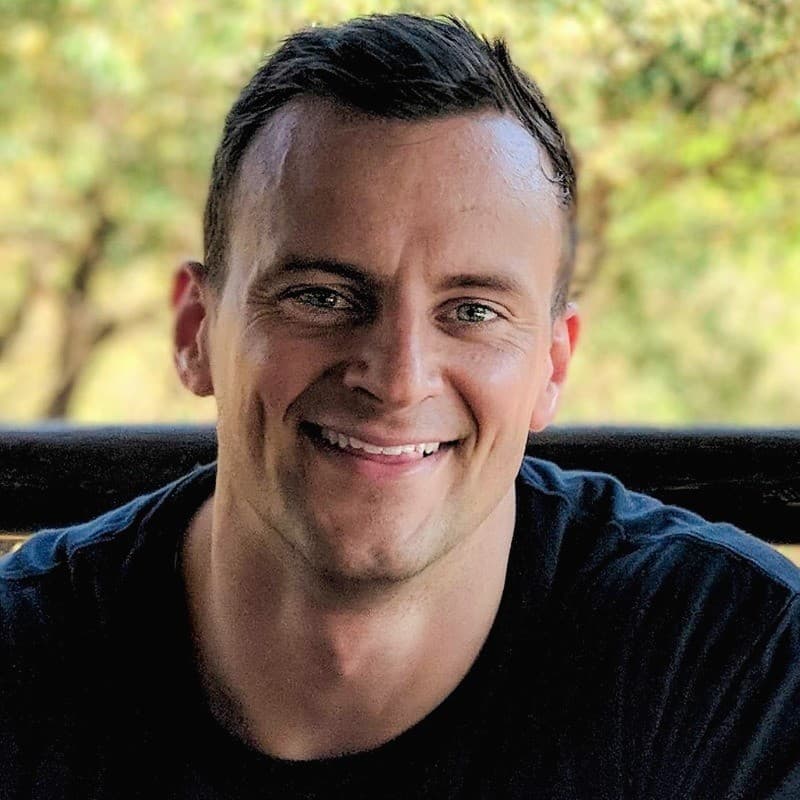
I grew up on a cattle farm in Ohio and spent years preparing for a career in surgery. Today, I’m a founder in San Francisco, building AI systems to help us understand and treat disease. The path between those places grew out of a few things that have mattered to me for a long time: being useful, building things, and taking responsibility for work that needs to be done.
Blue-collar roots
Farm work and timber-frame construction were part of my upbringing. There were animals to feed, machines to repair, and neighbors who helped when someone needed a hand. I learned to work with my hands and stay with a problem until the job was finished. Responsibility was concrete: livestock needed to be fed and watered every day, whether it was convenient or not.
My mother, a nurse practitioner, showed me another way to put those values to work. Watching her care for people and hearing her stories about medicine gave my ambitions a direction. I decided early that I wanted to become a doctor.
Learning far from home
My faith helped shape that sense of responsibility. During college, I spent two years as a missionary for my church in Seoul, South Korea. I went because I felt a duty to serve and wanted to do something good with my time. I learned Korean and adapted to life in a city very different from rural Ohio. I came home with a lasting love for the country and its culture.
Back in the United States, I prepared for medical school at Brigham Young University and joined the rugby team as a walk-on. I came to love the demanding training and the shared commitment of a team that took its work seriously. We won a national championship and finished second another year. I enjoyed working hard alongside people who expected a great deal of themselves and each other.
Medicine and a first business
When I began medical school, orthopaedic surgery felt like a natural fit. Years of sports had made injuries familiar, and my background with tools drew me to the practical demands of surgery. I could imagine a life spent working with my hands to help people, repairing fractures instead of joining timbers.
About halfway through medical school, an unexpected problem introduced me to entrepreneurship. My pet needed life-saving surgery that I couldn’t afford. I put the vet bill on a credit card and started making and selling hardwood furniture to pay it off.
I knew how to build furniture, and I was willing to spend extra hours in the garage after clinical shifts. Finding customers, managing a website, and shipping orders were unfamiliar problems. As I learned to solve them, I discovered how much I enjoyed the work. The business grew into a workshop with heavy machinery and employees. I still expected to become a surgeon, but I had found another kind of work that absorbed me: building products and figuring out how to build a business around them.
From medicine to software
During those same years, my clinical experiences were raising a different question. I helped organize global health trips and spent two summers working with patients and assisting in surgeries in sub-Saharan Africa and the Himalayas. Many patients lived far from specialist care. I wanted to keep helping people in places like these, but I wasn’t sure how to do that as an orthopaedic surgeon beyond the time I could spend there myself.
My first encounter with machine learning came through a much smaller problem. Late in medical school, a research project required making the same measurements on thousands of X-rays. The repetition made me wonder whether I could automate the work. I discovered computer vision and taught myself enough Python to build a machine-learning tool for the project.
That practical solution opened up a much larger curiosity. I began to see how broadly code and machine learning could be applied, and I wanted to understand what else they might make possible. I also began to connect those tools to the question I’d carried home from my clinical work abroad: could I build something useful to patients in places I might never have the chance to return to?
The year after earning my MD, I took a clinical AI position at Harvard Medical School while preparing to apply and interview for orthopaedic surgery residencies. I deliberately sought work that would let me explore AI and learn to code alongside engineers. At Massachusetts General Hospital, that curiosity kept deepening. I found myself increasingly absorbed in computation while still preparing for a surgical career, unsure how the two would fit together.
Choosing a different path
About seven months into that role, ChatGPT launched. Experimenting with it gave new weight to possibilities I had already begun to consider. What had felt like a fascinating detour started to look like work I wanted to devote my career to.
I had gone into medicine to help as many people as I could. Surgery offered a direct, tangible way to do that. With machine learning, I saw the possibility of contributing through tools that could reach far beyond my own clinical practice. I wanted to explore what computation could reveal about disease itself, and whether those insights could lead to better treatments.
By then, I had spent years preparing for residency. I still cared deeply about surgery, but my understanding of where I could contribute was changing. When the time came to submit my rank list, I chose not to. Instead, I decided to pursue graduate studies in computer science at Carnegie Mellon.
Preparing to be a founder
I made that choice intending to become a founder. I wanted to build companies that brought computation and biomedicine together, and I knew I needed a much stronger technical foundation to do the work I envisioned. I wanted to understand the systems well enough to build them myself, question their assumptions, and make informed decisions about what they could do. Carnegie Mellon gave me the opportunity to study the foundations of computer science and machine learning rigorously.
Building in San Francisco
I’m now putting that training to work in San Francisco, building AI systems to understand disease and develop better treatments. I bring a physician’s concern for patients, a builder’s desire to make things work, and a willingness to learn what the next problem requires. The purpose that drew me to medicine still guides me: to do useful work, help as many people as I can, and take seriously the responsibility that comes with the opportunity.
Let’s talk.
If you’re building, researching, or investing in AI and biomedicine, I’d be glad to connect.